Practical privacy management, all year round
We help you understand what personal information your organisation holds, where it is stored and who can access it. We then put the right procedures and records in place and support you as questions, requests and changes arise. The service is tailored to the way your organisation works and overseen by a DPO who holds personal certification.
What the DPO requirement means for your organisation
Amendment 13 to Israel's Privacy Protection Law came into effect on 14 August 2025. It requires certain organisations to appoint a Data Protection Officer. These include public bodies, organisations mainly engaged in collecting information for transfer to others, organisations that systematically monitor people on a significant scale, and organisations whose main activity involves processing large amounts of sensitive information.
According to the Privacy Protection Authority, the DPO serves as a point of expertise within the organisation and as its contact with the Authority. The role must be carried out without a conflict of interest. The Authority also recommends considering a DPO appointment even when it is not legally required.
Turning privacy requirements into ongoing work
We start by reviewing your organisation, the information it holds and the systems it uses. That gives us a practical work plan: what needs attention now, what should be checked regularly and who needs to be involved. Most clients require one to two hours of support each month, although the scope depends on the organisation.
Know which systems hold and process personal information
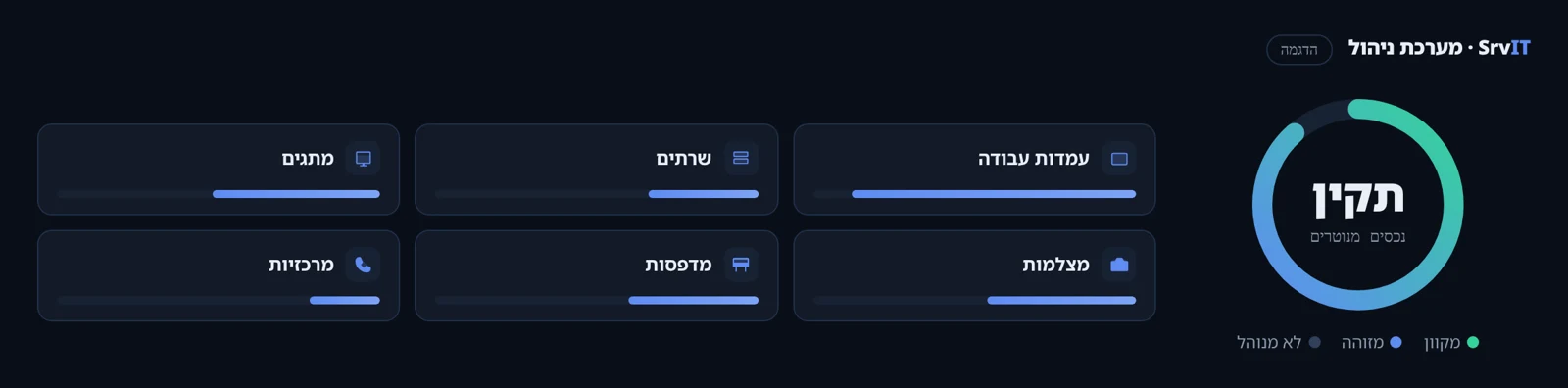
For clients whose IT is managed by SrvIT, ITDash already records the organisation's computers, servers and network components. This gives the DPO work a useful starting point. Instead of building an inventory from memory or relying only on written procedures, we can connect the privacy review to the systems that are actually installed and configured.
A clear scope, with clear responsibilities
The initial assessment determines the scope of the service, the areas we will cover and the people who need to be involved. These details are set out in the service agreement, so you know what SrvIT will handle, what we will need from your organisation and how the work will be followed up.
Privacy work that reflects what is really happening in your systems
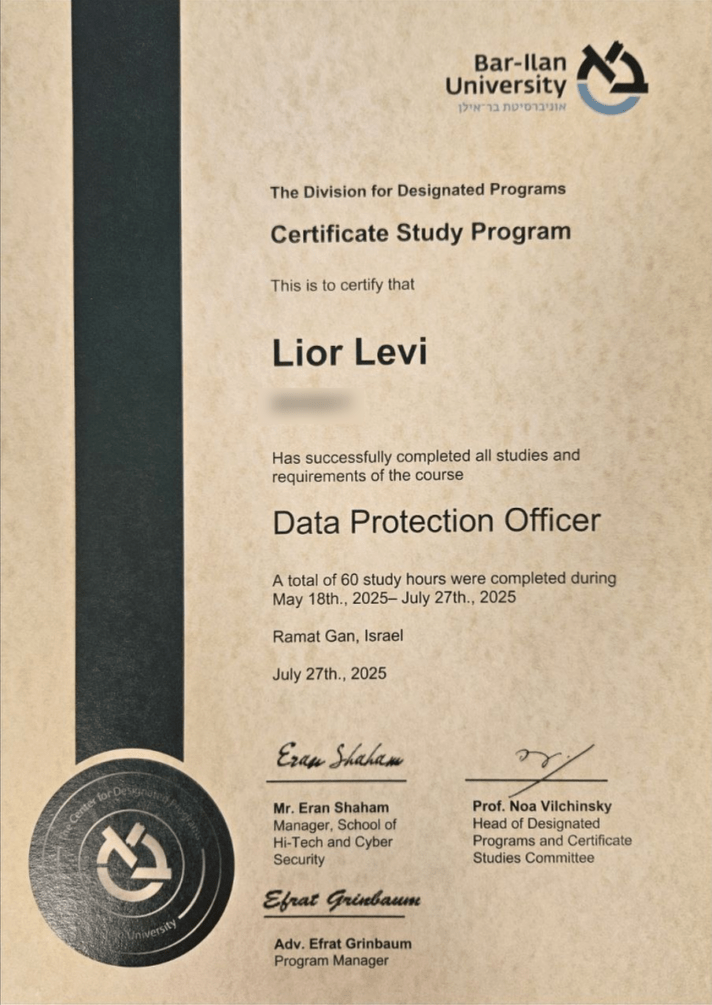
Our DPO services are overseen by Lior Levy, a member of the SrvIT team. Lior is SrvIT's own DPO and holds personal certification for the role. His certificate appears on our Standards and Certifications page.
If SrvIT already manages your IT, our team can review the systems and settings we work with every day. That helps us spot differences between a written procedure and the way access, storage or permissions are actually configured. It also means the privacy work does not take place separately from the people responsible for your IT.
You do not need to move your IT management to SrvIT to use our DPO service. We can work with your internal IT team or current IT provider. If technical work is needed and falls outside the DPO service, we will explain what is required and can provide a separate proposal.
First we build the picture, then we help you maintain it
We look at the personal information you hold, the systems involved, the people with access and the processes through which the information moves.
Together, we decide what should be handled first, what the ongoing service will cover and who needs to take part.
We prepare the relevant procedures and set up tracking for information assets, access permissions, suppliers and privacy-related requests.
We carry out the planned reviews, update the documentation and bring open issues to management. When your IT team, IT provider or another party needs to take action, we coordinate the work with them.
Frequently asked questions about outsourced DPO services
What does a Data Protection Officer do?
A DPO helps the organisation manage privacy matters in a consistent way. The DPO is also a point of expertise within the organisation and its contact with the Privacy Protection Authority. The work may include mapping personal information, developing procedures, documenting access, following up on individual requests, reviewing suppliers and updating management.
Who must appoint a DPO under Amendment 13?
The requirement applies to certain organisations. These include public bodies, organisations mainly engaged in collecting information for transfer to others, organisations that systematically monitor people on a significant scale, and organisations whose main activity involves processing large amounts of sensitive information. Whether the requirement applies to a particular organisation depends on its activities and the information it handles.
Can we use your DPO service without moving our IT management to SrvIT?
Yes. The DPO service is also available on its own. We can work with your internal IT team or current IT provider and coordinate any reviews or changes with them. If separate technical work is required, we can provide a proposal for it.
What is the advantage if SrvIT already manages our IT?
Our team already knows your computers, servers, network components and current configuration. This allows the privacy review to be based on the systems you actually use, rather than documentation alone. When a technical change is needed, it can also be coordinated with the same team that manages your IT.
How many support hours are needed each month?
Most organisations need one to two hours of support per month. We set the scope after the initial assessment, based on the information you hold, your activities and the matters that require ongoing attention.
Does the service replace legal advice?
No. The service covers ongoing privacy management, documentation, reviews and professional support. If your organisation needs a legal opinion or interpretation, you should obtain advice from an appropriate legal professional.
Let us look at how privacy is currently managed in your organisation
In an introductory call, we will ask about the information you hold, the way your IT is managed and what you need from a DPO service. The service can be added to your ongoing work with SrvIT or provided separately.
The information on this page is general and does not replace legal advice.